
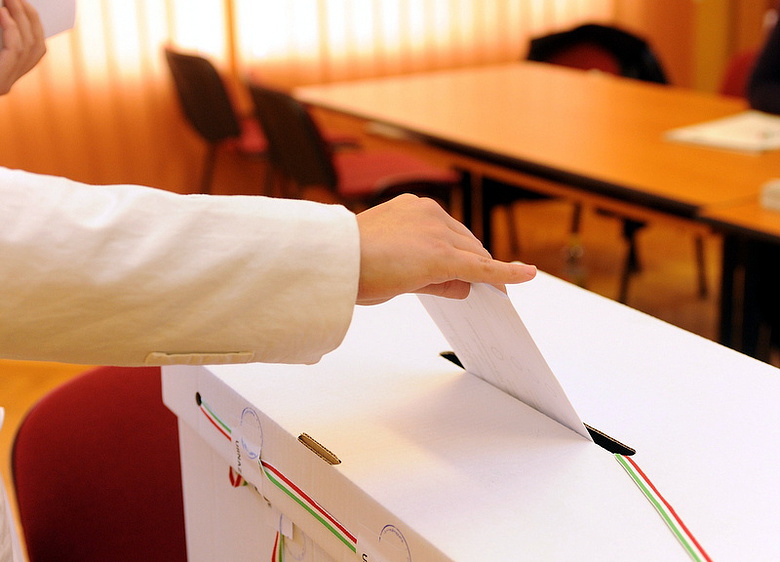
One of the most politically sensitive stories in Hungary’s election campaign is no longer a poll or a rally, but a documentary. The Price of a Vote, released by the De! Action Community, alleged that in parts of rural Hungary electoral influence is maintained through intimidation, dependency and, in some cases, direct vote-buying. Telex’s English coverage reported that the filmmakers conducted more than 60 interviews across 10 counties, focusing mainly on eastern and northeastern areas where they said unusually lopsided past results had raised suspicions.
The film’s central claim is broader than simple cash-for-votes transactions. According to the reporting on the documentary, the filmmakers argue that the real mechanism is structural dependence: vulnerable voters may be influenced through access to work, firewood, medicine or other forms of local control, with outright vote-buying only one part of that system. Telex quoted filmmaker Áron Tímár as saying the project began as an inquiry into vote-buying but evolved into something larger: “dependency, rooted in vulnerability.”
That distinction matters because the strongest verified fact here is not that every allegation in the film has been independently proven, but that the documentary triggered a national debate about whether elections in some of Hungary’s poorest communities are shaped by coercive local power structures. Telex described the film as relying largely on interviews with former participants, opposition voters in deep poverty, mayors and police officers. That is substantial evidence of a pattern being alleged, but it is not the same as a court-established finding on each claim.
A Minister’s Limited Reply
The most notable official reaction came from Tibor Navracsics, the minister of public administration and regional development. According to Telex, the BBC approached multiple ministries, the government, the Interior Ministry and the police, but by publication had received a reply only from Navracsics. His response was brief and procedural: “If any irregularity arises, then let the Interior Ministry do its job.” Telex also noted that he did not address the documentary’s specific allegations.
Politically, that was a restrained answer. It neither rebutted the film point by point nor endorsed its conclusions. Instead, it shifted the issue into an institutional frame, suggesting that any substantiated wrongdoing should be handled by the competent authorities. Based on the cited reporting, no fuller government rebuttal to the documentary’s detailed claims had been publicly recorded at that stage.
Why the Allegations Matter
The documentary became important because it touched one of the most sensitive questions in any election: whether voters in highly unequal communities can act freely when access to basic necessities may depend on local power brokers. Telex reported that the filmmakers focused on settlements where past results for Fidesz had reached 80% to 100%, which they viewed as suspicious enough to investigate further. That does not prove fraud by itself, but it helps explain why the film resonated so quickly in the middle of a closely watched national campaign.
The broader significance lay in the way the film reframed the issue. Rather than presenting election abuse only as isolated bribery, it argued that local dependency itself can become a political instrument. That framing gave the story force because it connected alleged malpractice to poverty, inequality and municipal power, not just to campaign tactics. This is a characterization of the documentary’s reported argument, not an independent finding that all such practices occurred as alleged
Photo: OVB Magyarország/Facebook