
Just days before Hungary’s election, explosives were discovered near gas infrastructure linking Serbia and Hungary, close to the village of Oromhegyes, turning what began as a suspected security incident into a broader political confrontation.
Serbian authorities opened an investigation on suspicion of sabotage after two backpacks containing what appeared to be explosive materials, detonators and other equipment were found near the pipeline. Serbia’s military security service later said the material may have been American-made, while also cautioning that the place of manufacture alone says nothing about who may have planned or carried out a possible attack.
While the facts established so far remain limited, the political interpretations moved quickly and in sharply different directions.
Government frames case as a sovereignty and energy security threat
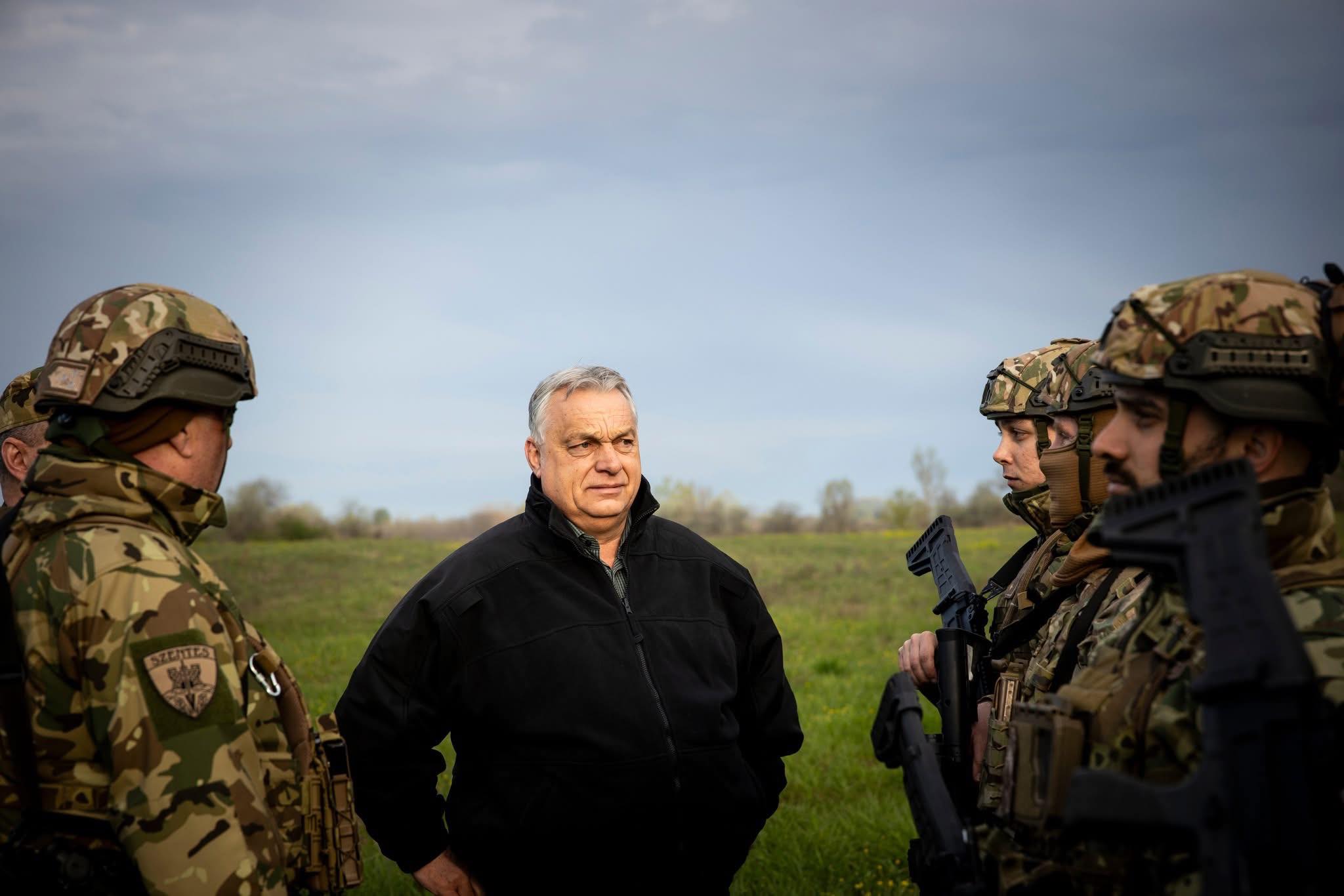
Hungary’s government was quick to treat the incident as more than a local Serbian criminal investigation. Prime Minister Viktor Orbán convened an extraordinary meeting of the Defence Council and said the available information suggested that preparations may have been underway for an act of sabotage.
In the government’s framing, the case directly affects Hungary because a substantial share of the country’s gas supply reaches it through this route. Officials responded by tightening security measures, and soldiers were deployed to help protect the Hungarian section of the TurkStream pipeline.
Orbán also placed the case within a broader narrative his government has pushed for weeks: that energy security is inseparable from national sovereignty, that Hungary is under pressure from external forces, and that the consequences of the war in the region are now reaching critical infrastructure more directly.
Under that interpretation, the discovery near Oromhegyes is not an isolated incident but a warning that infrastructure essential to Hungary’s functioning could itself become a target.
Opposition questions the speed of the political framing
The opposition and opposition-aligned media have focused less on disputing the possibility of a real threat than on the speed with which the government attached a political meaning to the case.
In their reading, the more striking development is that while the investigation remains open, the ruling side has already offered a ready-made interpretation and implied a broader political storyline. From that perspective, the issue is not only what happened near the pipeline, but also who stands to benefit from defining its meaning in the final days of the campaign.
This line was reinforced by Péter Magyar, leader of the opposition Tisza Party. He said his party had already received warnings about the possibility of a “false flag” provocation that could later be used for political purposes. Magyar argued that if the government turns the case into campaign messaging, that would strengthen such suspicions.
That claim does not establish who was behind the incident. It does, however, underline how the opposition has treated the affair from the outset not simply as a security matter, but as a politically contested narrative.
International reactions add to the confusion
Responses from abroad have done little to clarify the picture. Ukraine denied any involvement and suggested the possibility of a Russian provocation. Moscow, in turn, pointed to possible Ukrainian links. Rather than narrowing the field of explanations, the competing claims deepened the uncertainty around the case.
The Serbian security service’s statement that the material may have been of American manufacture similarly fueled speculation without resolving the core questions. Serbian officials themselves stressed that such a detail, on its own, cannot support firm political conclusions.
A dispute over meaning, not just facts
The case is now unfolding on two tracks at once. One is the security dimension: potentially dangerous devices were found near strategically important energy infrastructure. The other is political: rival camps are competing to define what the incident means and how it should be understood by voters.
For the government, the emphasis is on vulnerability, sovereignty and the protection of energy supply routes. For the opposition, the focus is on timing, political utility and the risk that an open investigation is being folded too quickly into campaign messaging.
As a result, the controversy is no longer only about what happened near the Serbia-Hungary gas link. It is also about who gets to shape the political meaning of the incident before Hungarians go to the polls.
Photo: Facebook/ Szalay Bobrovniczky Kristóf