
More than a national contest
Hungary’s April 12 election is being interpreted abroad as more than a domestic contest over who governs next. In much of the international commentary, it has become a test of whether Hungary will continue to function as the European Union’s most difficult internal actor, or begin moving toward a more predictable and cooperative role. That framing, however, can be too narrow. It often assumes that the main difference between the current government and the opposition would be one of style — less confrontation, calmer diplomacy, fewer vetoes. But the opposition’s own language suggests something broader: not a wholesale rupture, but a meaningful change in how Hungary would place itself within Europe and the wider Western alliance system.
Why the dominant outside reading may be too narrow
The prevailing external view remains cautious for understandable reasons. Even analysts who consider a change of government plausible generally stop short of predicting a dramatic foreign-policy reset. The more common expectation is that a new leadership would lower the temperature, reduce tactical confrontation and make Hungary easier to work with, while leaving core national interests largely intact.
A Fidesz victory would mean strategic continuity
If Fidesz, under Viktor Orbán, wins again, the larger trajectory is unlikely to change in any fundamental way. Hungary would almost certainly continue to define its role inside the EU through the language of sovereignty, national room for maneuver and resistance to external pressure. The readiness to delay, weaken or block common European positions — especially on Ukraine — would remain central to how Budapest exercises influence.
In that sense, another Orbán victory would mean more than continuity in office. It would confirm the durability of a governing method that has made confrontation not an occasional tactic, but a core feature of Hungary’s place in European politics.
The opposition is signaling more than a softer tone
A government led by Péter Magyar, by contrast, is not presenting itself simply as a softer version of the current administration. Opposition figures have stressed continuity in national interests and repeatedly used the language of pragmatism, but they have also outlined substantive departures on key strategic questions. These include a clearer alignment with EU and NATO positions, less reliance on veto-based leverage as a primary political instrument, and a more explicit effort to anchor Hungary within the Western alliance system rather than constantly defining it against Brussels.
Ukraine is one of the clearest dividing lines
Ukraine is one of the clearest examples of that difference. Opposition voices have spoken more directly about Russia as the aggressor and have placed greater emphasis on the importance of a stable and sovereign Ukraine. At the same time, they have not adopted a position of unqualified enthusiasm. Reservations remain over rapid EU enlargement, and the rights of the Hungarian minority in Ukraine continue to be treated as a serious issue.
But even with those qualifications, the overall line is less ambiguous than the current government’s. The shift would not lie in abandoning Hungarian interests, but in pursuing them from a more clearly Western position.
The real difference is structural, not rhetorical
That is why the gap is not merely rhetorical. It concerns the underlying logic of foreign policy: how Hungary would understand its place inside alliances, how it would use EU instruments such as the veto, and how openly it would align itself with Western political and security frameworks. For outside observers, those are not cosmetic adjustments. They go to the heart of whether Hungary would remain a state defined by permanent friction or become one that seeks influence through cooperation rather than obstruction.
The regional implications are just as important
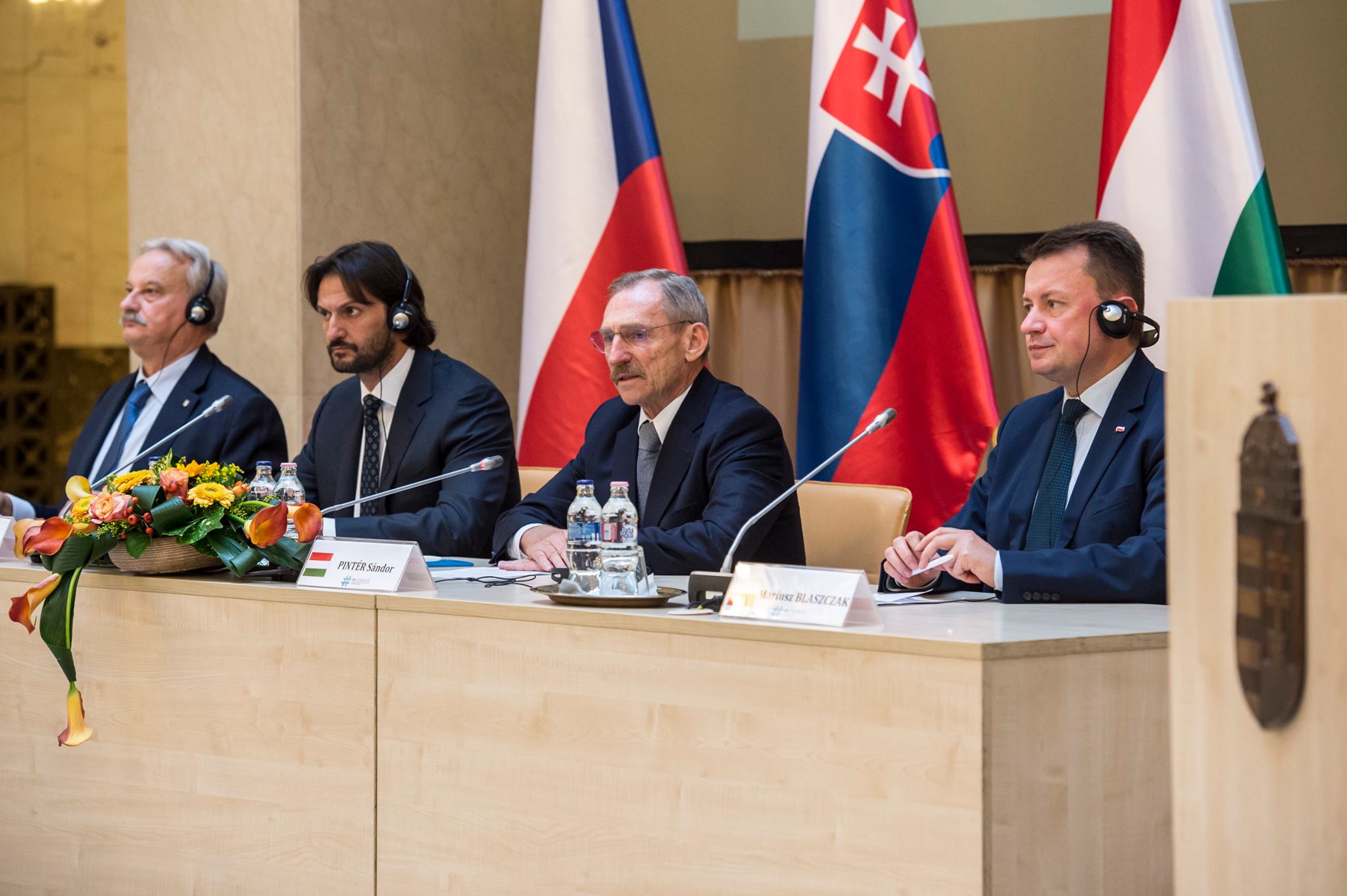
The opposition has also signaled that it would try to rebuild Visegrád cooperation, particularly by repairing relations with Poland and Czechia, which have deteriorated sharply since the start of the war in Ukraine. If carried into government, that would mean more than a change in diplomatic tone. It would amount to a recalibration of Hungary’s regional strategy — away from isolation within Central Europe and toward a more functional, interest-based form of coordination.
Why the V4 still matters
That possibility matters because the Visegrád framework has not simply weakened; it has lost much of its earlier political coherence. Poland and Czechia moved firmly toward a pro-Ukraine and anti-Russian position, while Budapest increasingly stood apart. In that setting, Hungary’s election is not only about the future of one government. It also raises the question of whether Central Europe can still operate through a shared political logic, or whether the divide between Hungary and its neighbors will harden into something more lasting.
Why the election matters beyond Hungary
This is what gives the election its wider significance. Domestically, it will decide whether Orbán can extend a long period of uninterrupted rule. At the European level, it will shape whether the EU must continue planning around a consistently obstructive internal actor. Regionally, it may determine whether Hungary remains on its current exceptionalist path or begins moving back toward a more integrated Central European role.
A gradual shift can still be a major one
The prevailing international interpretation — that any change would be gradual rather than transformative — reflects sensible caution. Yet it may still underestimate the significance of even a measured shift. In the current European environment, changes in alignment, veto practice and regional cooperation do not need to be revolutionary to matter. They can alter how decisions are made, how trust is rebuilt and how political balance develops across the region.
That is why this election is not being watched simply as a domestic power struggle. It is being watched as a sign of where Hungary may be heading — and, to some extent, where Central Europe may be heading with it.
Facebook/Magyarország Kormánya