
A fire at a defence-linked industrial site in Pardubice has developed into something larger than a criminal investigation. Czech authorities are treating the case as a possible terrorist attack, Prime Minister Andrej Babiš convened the state security council in response, and Hungary moved almost immediately to tighten protection at its own defence-industry facilities. No injuries were reported, but the incident raised immediate concern about how exposed strategic industrial sites in Central Europe may be to politically motivated attacks.
The sequence of events mattered as much as the fire itself. The blaze broke out overnight at an industrial complex east of Prague and spread from one building to another. Police and security services then escalated the case into a terrorism-related investigation after a group claimed responsibility and described the target as part of a weapons supply chain linked to Israel. That shifted the story from a suspected act of arson to a broader question of industrial vulnerability in a more volatile regional environment.
Czech authorities moved quickly
The confirmed Czech response was swift and high-level. Interior Minister Lubomír Metnar said the available information pointed toward a likely link to terrorism, and the case was examined under criminal provisions tied to terrorist activity. Babiš responded by convening the state security council, signaling that Prague was treating the incident as a matter of national security rather than ordinary sabotage or property crime.
The investigation also narrowed some of the more dramatic claims circulating around the target. A defence company operating at the site confirmed there had been a fire, but said a previously announced 2023 cooperation plan with Israel’s Elbit Systems had never been implemented there. In other words, what is firmly established is that the site was defence-related and under terrorism investigation; what is not established is that it was actively producing Israeli military equipment at the time of the attack.
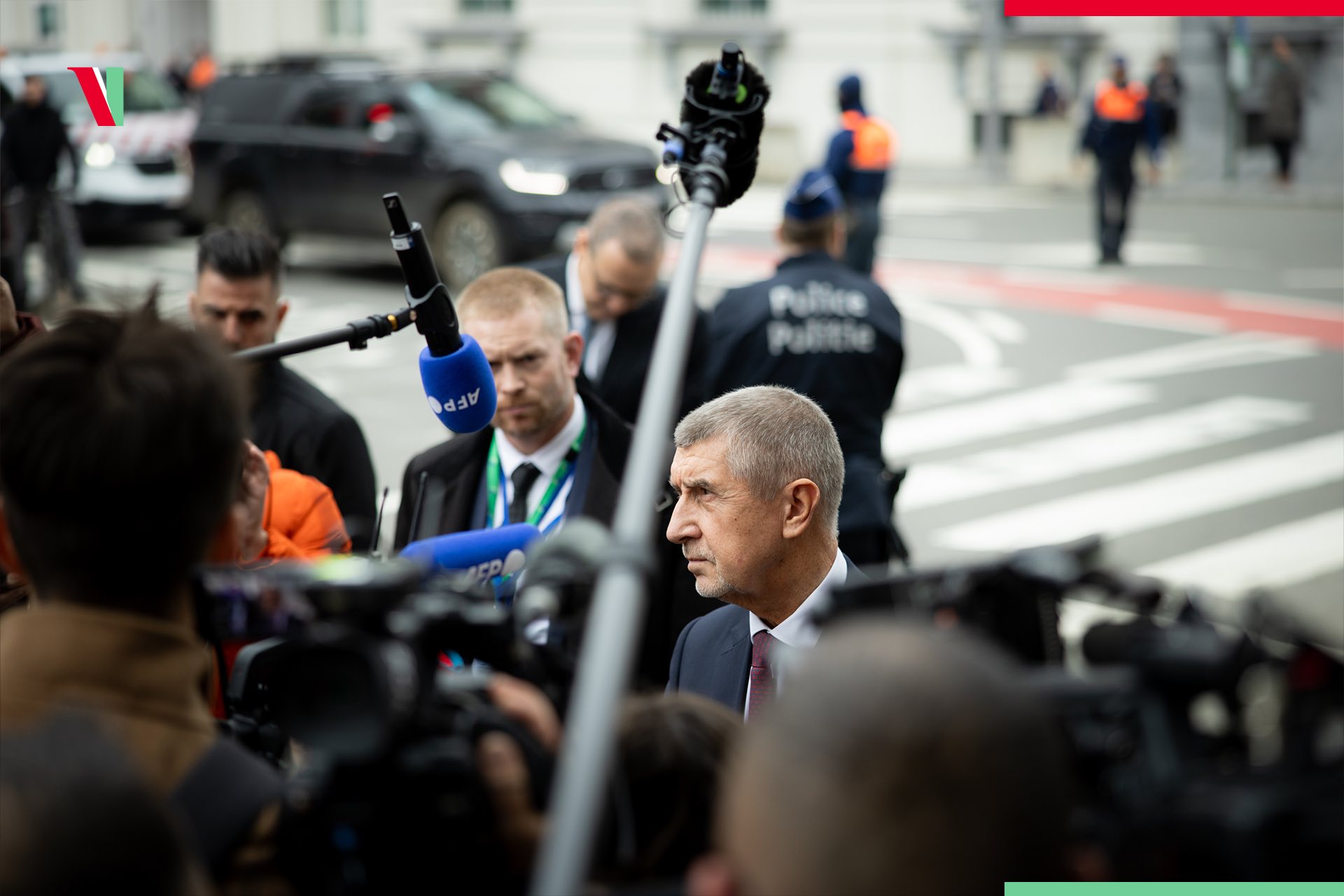
Babiš abandoned his Budapest trip
The fire also had immediate political consequences beyond Czechia. Babiš canceled a planned appearance in Budapest after the incident and returned to deal with the fallout at home. That decision underscored how seriously Prague viewed the case: a foreign political engagement was dropped in favor of direct crisis management.
Even without overstating the symbolism, the cancellation mattered. It showed that the fire was not being handled as a contained industrial accident, but as a security event serious enough to alter the schedule of the Czech prime minister in real time. That is an inference drawn from the decision to turn back and the official escalation that followed.
Hungary widened the response to its own defence sector
Budapest reacted by expanding protection at home. Viktor Orbán said Hungary had reinforced security at defence-industry facilities after the Czech attack, extending a logic the government had already applied to energy infrastructure. He also said the group claiming responsibility had been designated a terrorist organization in Hungary and warned that any members entering the country would be arrested.
That wording is significant because it placed defence factories in the same category as other strategic assets that governments in the region now see as potential targets. The Czech fire did not simply prompt sympathy or rhetorical concern; it triggered a concrete security adjustment in a neighboring state.
A warning for Central Europe’s industrial backbone
The broader importance of the episode lies in what it may signal about the region’s security environment. Czech investigators have since detained multiple suspects, including individuals in Czechia and Slovakia, and the case has expanded beyond the original fire into a wider counterterrorism operation. That does not yet establish a durable pattern of coordinated attacks on defence industry targets across Central Europe. It does, however, show that authorities are now treating such sites as realistic targets for politically motivated violence.
The cleanest fact-checked conclusion is this: a fire at a defence-linked facility in Pardubice is being investigated as a possible terrorist attack; the Czech prime minister cut short his travel plans to respond; Hungary tightened security at its own defence-industrial plants; and the case has pushed industrial protection higher on the regional security agenda. What remains unresolved is who ultimately organized the attack, whether the public claim of responsibility is authentic, and whether the incident was isolated or part of a wider emerging threat.
Photo:Facebook/ Orbán Viktor